Home · Industries · Energy & Comm
Industry Route · Energy & Communication
Gateways that keep talking when the cabinet gets hot
In public-power and grid-tied setups, the board is not the switchgear — it is the data processing and communication layer: protocol gateways, telemetry nodes, cabinet controllers. These three boards carry the interfaces that work demands — dual LAN, PoE, wide DC input and −20/+60°C operation.
DUAL 2.5G LAN · PoE PSE · DC 9–36V · AMT · −20/+60°C
In The Cabinet
Four things a utility cabinet asks for
- Communication density: the PDM-5110 quotes two Intel i226-V 2.5G ports plus a PoE PSE header — multiple segments and powered devices from one gateway.
- Data processing at the node: Alder Lake-N and Twin Lake-N CPUs with onboard LPDDR5 up to 16GB on the PDM-5110 and AD742A run protocol conversion and telemetry close to the field.
- Wide, sagging power: DC 9–36V on the TL500Z3AW rides substation and cabinet rails that sag under load; the PDM-5110 takes DC 12–24V.
- Remote service: AMT on the TL500Z3AW management port plus a 0–255 s watchdog — out-of-band power control for cabinets nobody visits.
Recommended Models
Three gateways for the comm layer
Fields quoted from the model pages. These boards do data processing and communication inside public-power and grid-tied setups — no utility certification is claimed.
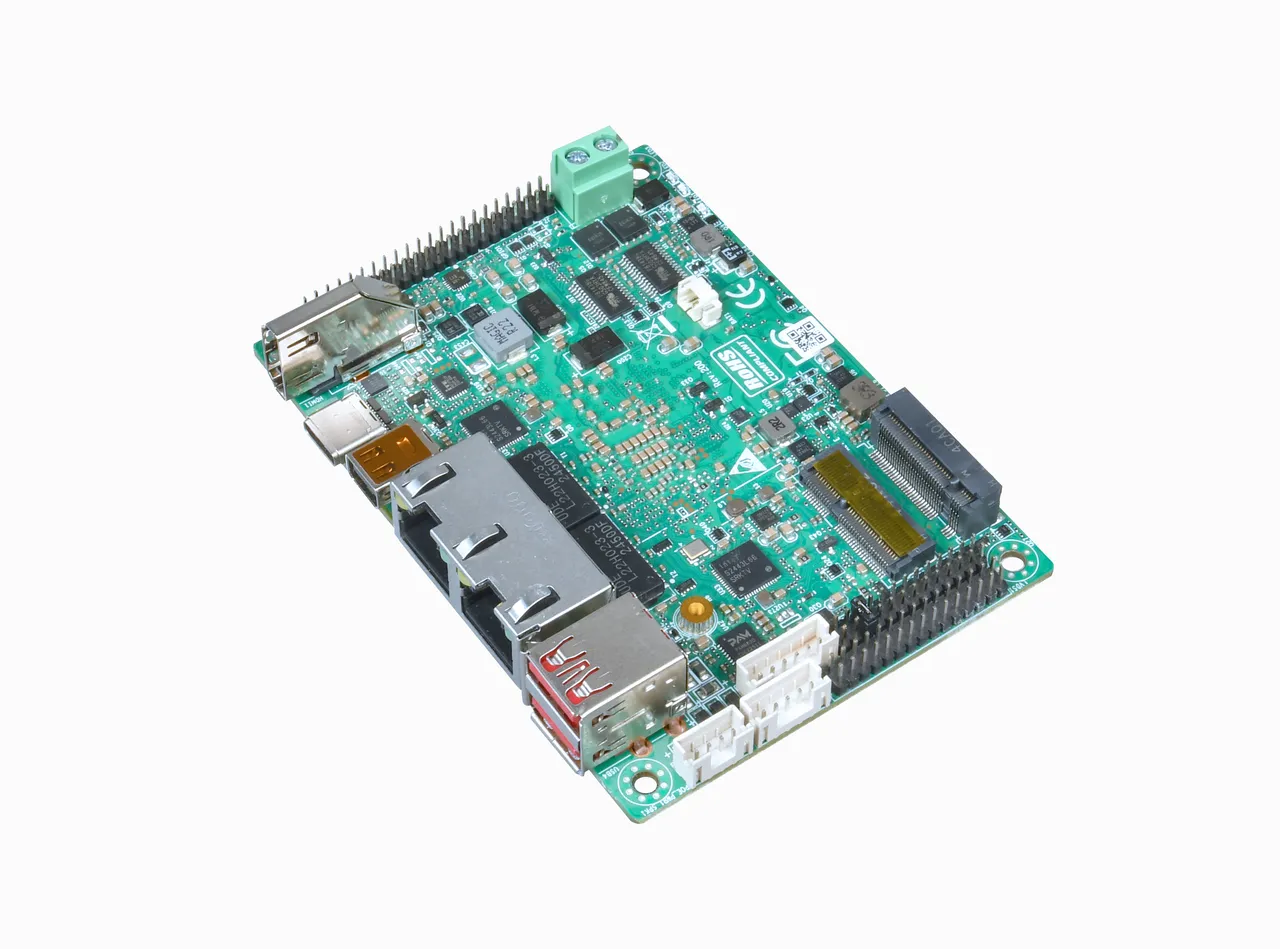
PDM-5110
Alder / Twin Lake-N · N97–i3-N305
2× i226-V 2.5G, PoE PSE header, DC 12–24V 60W, LPDDR5 16GB.
Why: dual 2.5G plus a PoE PSE header suit gateway duty in public-power data and communication roles.
View →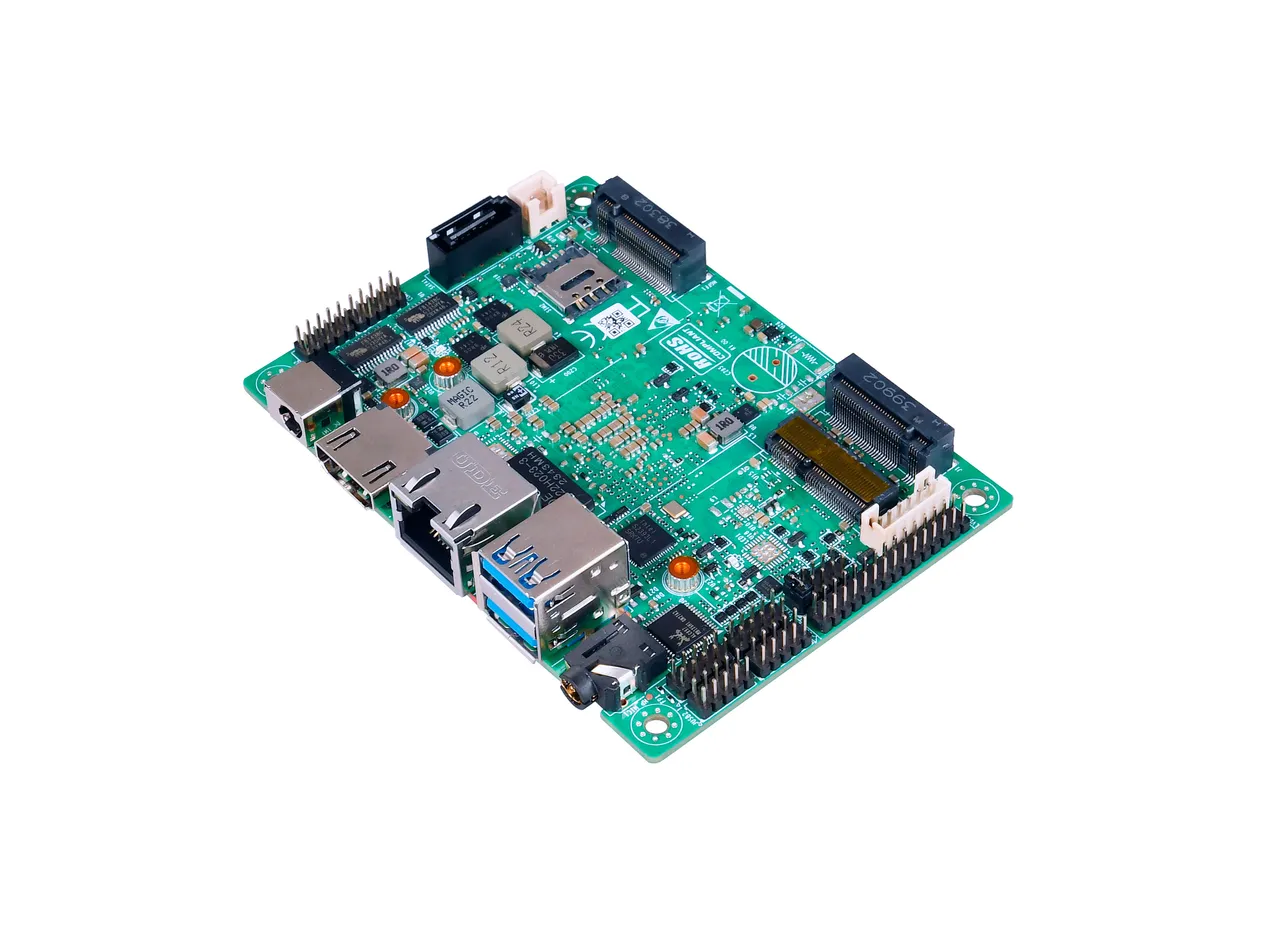
AD742A
Alder Lake-N · N100–N150
i226-V 2.5G with PoE option, DC 12V 60W, 2× COM RS232/422/485.
Why: low-power 60W node with optional PoE — sized for compact communication cabinets.
View →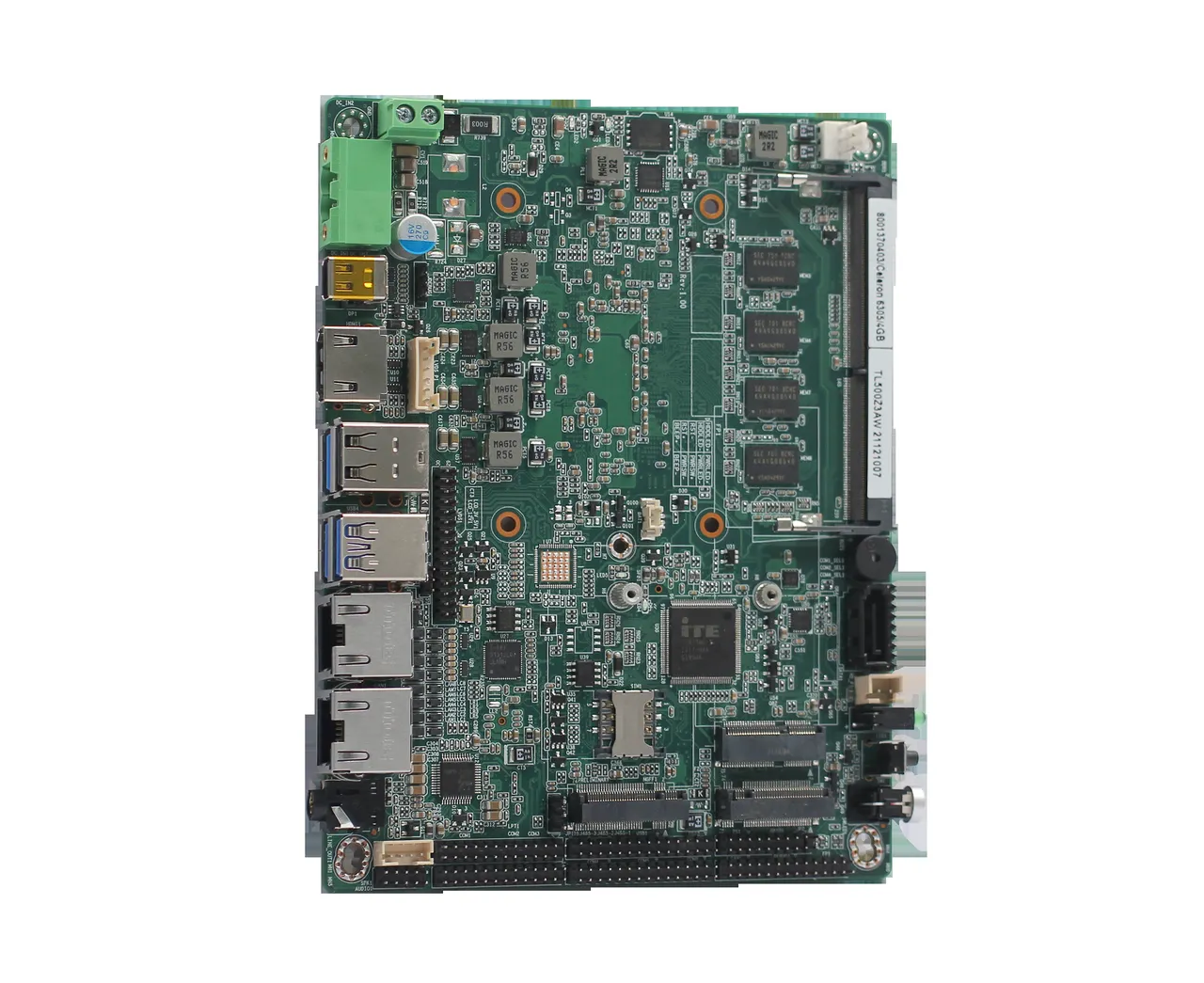
TL500Z3AW
Tiger Lake-U · 6305U–i7-1165G7
DC 9–36V 90W, 2.5G + AMT, six COM mixed RS485, watchdog.
Why: 9–36V input and AMT keep cabinet gateways talking through sagging rails.
View →Communication-Node Checklist
Match the cabinet, then the gateway
Typical requirements for the data processing and communication layer against the datasheet fields of the three recommended models.
| Cabinet Requirement | Datasheet Field | On Board |
|---|---|---|
| Cabinet heat | −20/+60°C operating | PDM-5110 · AD742A · TL500Z3AW |
| Segment links | 2× Intel i226-V 2.5G | PDM-5110 |
| Powered devices | PoE PSE header | PDM-5110 (AD742A: PoE optional) |
| Node compute | Alder/Twin Lake-N, LPDDR5 16GB | PDM-5110 · AD742A |
| Hard-wired rails | DC 9–36V | TL500Z3AW (PDM-5110: DC 12–24V; AD742A: DC 12V) |
| Remote management | AMT + watchdog 0–255 s | TL500Z3AW |
Questions
Energy & communication, answered
They handle the data processing and communication layer in public-power and grid-tied setups — protocol conversion, gateway routing and telemetry. They are not power-conversion hardware, and no utility certification is claimed on this page.
All three models quote −20 to +60°C operating temperature — cabinet air that runs warm in summer stays within the stated range without derating.
The PDM-5110 quotes a PoE PSE header and the AD742A lists PoE as optional — both per the published datasheet fields.
Model Matrix
Boards matched to energy
Models whose published application notes and interface set fit this workload — pulled from the GEOLiNK specification sheets, with the CPU, panel output and power input that matter for the selection.
| Model | CPU | Display | Power |
|---|---|---|---|
| AD600Z3AW | Intel 12th / 13th Gen -U / -P Series processors (optional -U / -P / -H Series) TDP: 28W BIOS: EFI BIOS | 1 x HD2.1 1 x 24-bit LVDS (LVDS / eDP selectable) 1 x MiniDP Type-C (USB + DP) | Standard input: DC 9-36V |
| MSK-TL5003AW | Onboard Intel 11th Gen Tiger Lake-U series, EFI BIOS Optional CPU: Celeron 6305 / i3-1115G4 / i5-1135G7 / i7-1 | HD2.0 interface, supports 4096 x 2160 @ 60 Hz eDP | Standard input: DC 9-36V, 90W |
| PNM-5210 | Onboard Intel Twin Lake / Alder Lake series, TDP 15W BIOS: EFI BIOS Available CPU options: N150, N305 | 1× HDMI 2.0 interface, supports 3840 × 2160 @ 60Hz | DC 9 ~ 36V wide-voltage input |
| RP7003AW | **CPU**: Intel Core 12th/13th Generation -U/-P series **BIOS**: EFI BIOS | **Interfaces**: 1 × DP 1.4; 1 × HDMI 2.0; 2 × Type-C **Optional**: 1 × LVDS / EDP (optional) | **Input**: DC 9-36V **Power rating**: 120W |
| TL500Z3AW | Onboard Intel 11th Generation Tiger Lake-U Series Processor EFI BIOS CPU Options: Celeron 6305U / i3-1115G4 / | 1 × HDMI 2.0 1 × LVDS (LVDS / EDP selectable, one of the two) 1 × MiniDP (DP++) Dual-channel 24-bit LVDS / HDM | DC 9-36V, 90W Copper fan heatsink |
| UT1003AW | Intel Core Ultra-U/H series processors (U-15W, H-28W) EFI BIOS Optional CPU models: 135H / 125H / 125U / 165H | 1 x HDMI2.1 1 x DP2.1 1 x TYPE-C (supports 4K) 1 x 24-bit LVDS (LVDS / EDP, selectable one of two) | DC 9-36V (wide voltage input) |
Get A Quote
Heat, sagging rails and no one to call — that is the cabinet.
Send the bus voltage, segment count and cabinet temperature — we’ll confirm the gateway board within 24–48 hours.