Home · Industries · Digital Signage
Industry Route · Digital Signage
Screen walls that outlast the campaign
A signage player has one job: push pixels to panels in a shopping center for months at a time, unattended. The screen count decides the board — and every model below quotes its display outputs on the datasheet, from dual 4K to four simultaneous panels. The memory ceiling, in turn, decides the player class: how many content layers can stay cached and current.
4 SIMULTANEOUS PANELS · HDMI 2.1 / DP 4K · DUAL 2.5G LAN · DDR5 96GB · −20/+60°C
Behind The Screen
Four ways a player differs from a PC
- Display-first layout: the AR200CA quotes 2× HDMI 2.1 4K plus 2× Type-C with DP 4K — four simultaneous panels from a 100×100 board.
- Two networks, not one: dual 2.5G LAN on all three models keeps the content feed separate from the management path, so a broken uplink cannot strand a screen wall.
- Compute for layered content: Ryzen AI 9 365 on the HK800CA and Core Ultra Arrow Lake on the AR200CA render rich layers; the TL500CA’s Tiger Lake i5/i7 covers standard playback fleets.
- Compact install: 100×100 boards slide into slim players behind the panel, with M.2 2280 NVMe for fast content storage on the HK800CA and AR200CA.
Recommended Models
Three players for the screen wall
Display counts, memory and LAN are quoted from the model page datasheets — nothing added. For price-sensitive fleets, the TL500CA keeps the same 100×100 footprint with DDR4 memory and a MiniPCIe slot for wireless content delivery.
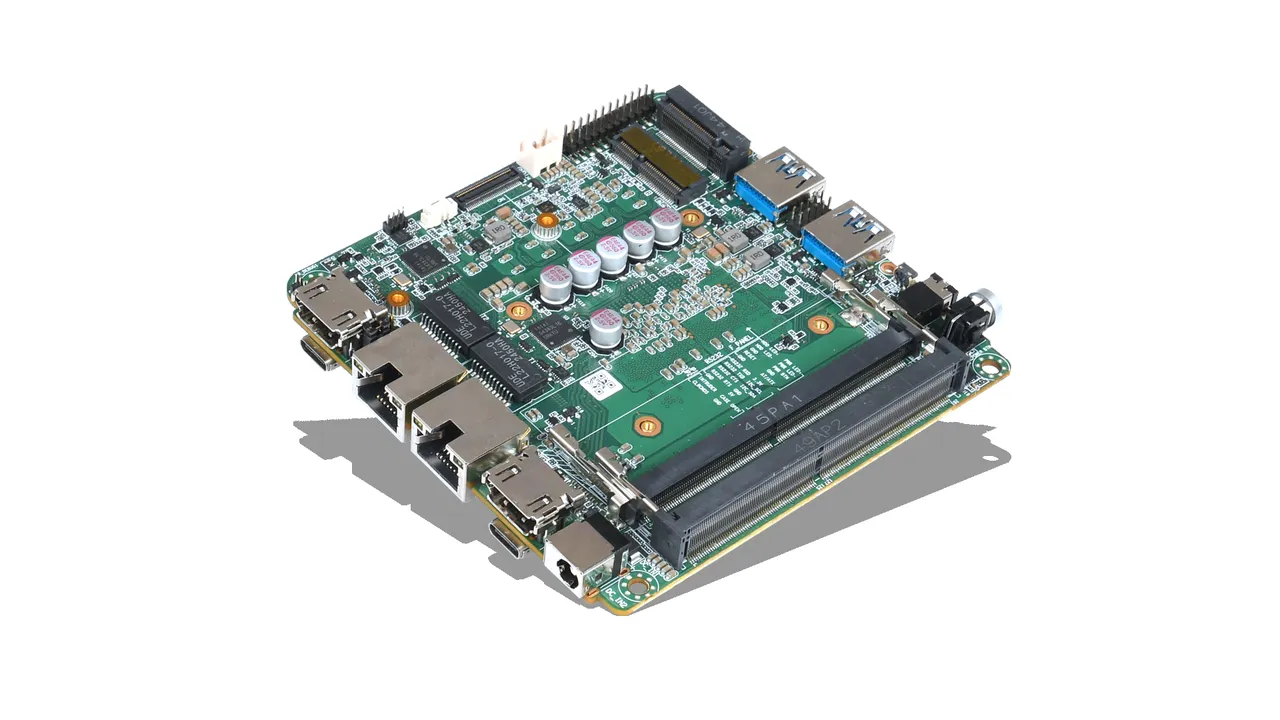
HK800CA
AMD Ryzen AI 9 365
DDR5 64GB, 2× HDMI 4K + Type-C 4K, dual i226-V 2.5G, M.2 NVMe.
Why: triple display with the Ryzen AI 9 365 on the CPU field — for content engines with live data layers.
View →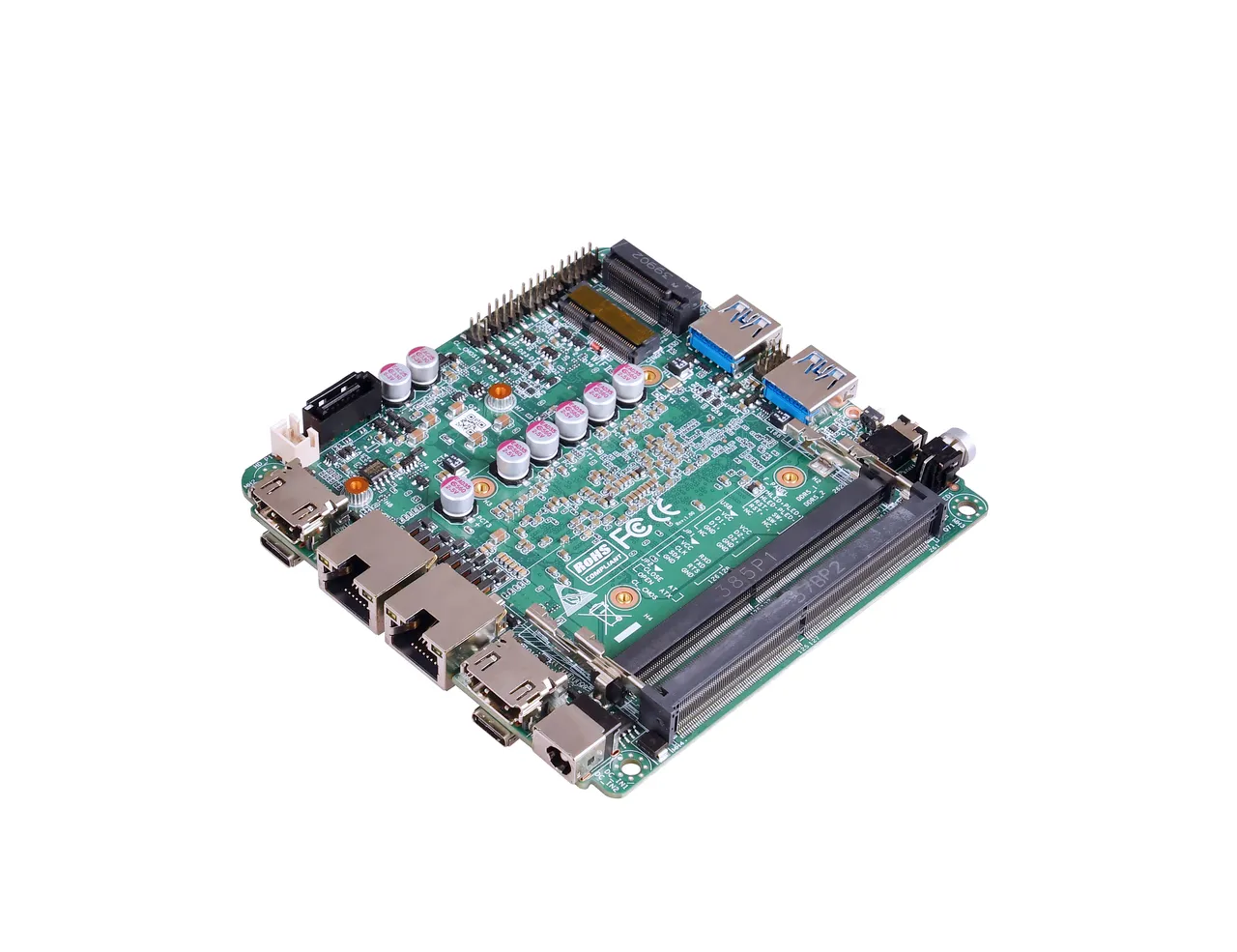
AR200CA
Core Ultra Arrow Lake · 28W
DDR5 96GB, 2× HDMI 2.1 4K + 2× Type-C DP 4K, dual i226 2.5G.
Why: four simultaneous 4K outputs and the largest memory ceiling in the NUC family per the datasheet.
View →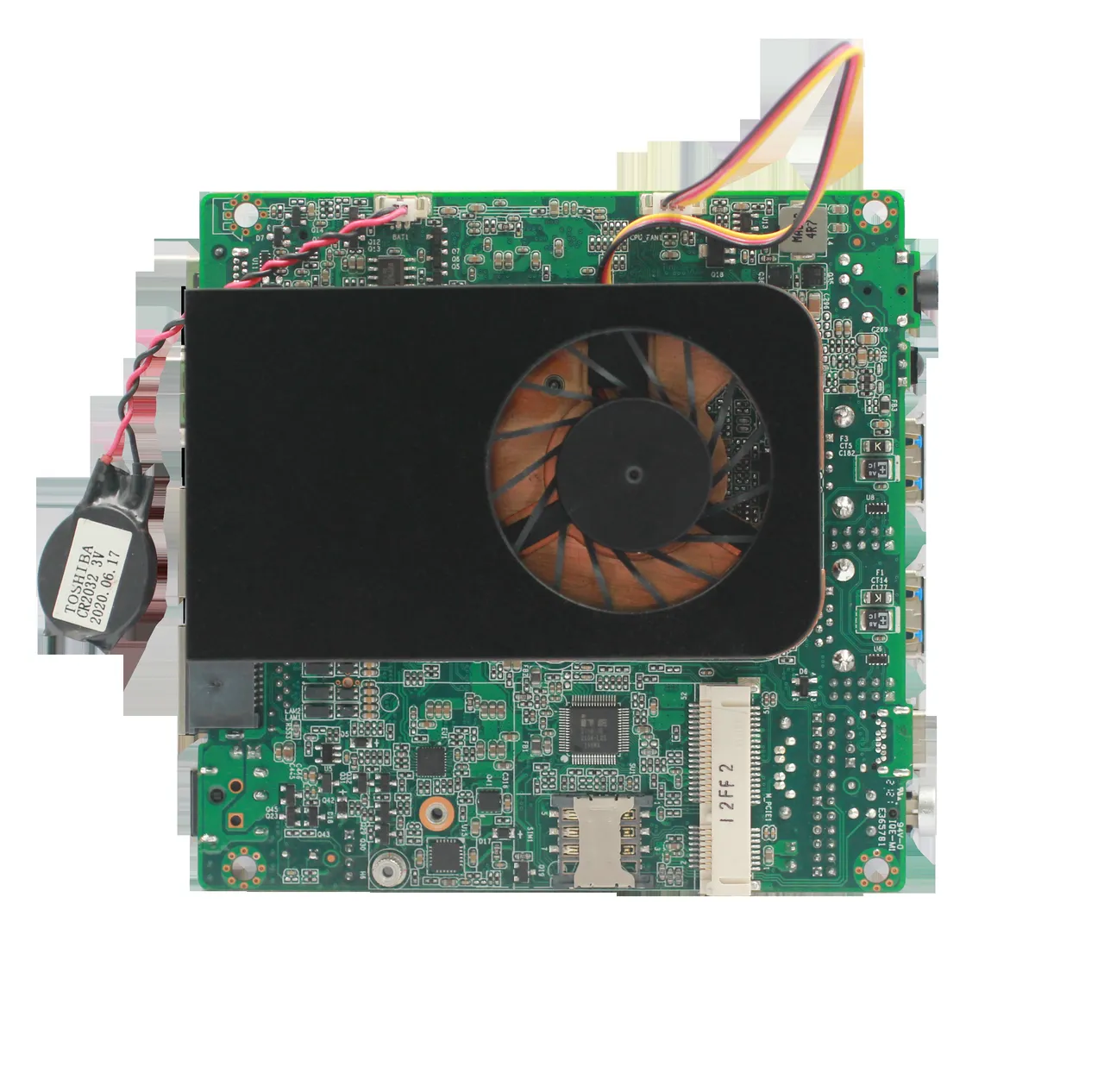
TL500CA
Tiger Lake-U · i5/i7
DDR4 64GB, HDMI 4K + MiniDP 4K, dual 2.5G, MiniPCIe WiFi/3G/4G.
Why: cost-effective dual-screen player with MiniPCIe for cellular content refresh at remote sites.
View →Questions
Digital signage, answered
The AR200CA quotes 2× HDMI 2.1 4K plus 2× Type-C with DP 4K — four simultaneous panels; the HK800CA drives three and the TL500CA a dual-screen set.
All three models carry dual 2.5G LAN, so the content feed and the management path stay on separate segments; the boards operate at −20 to +60°C per the datasheets.
Behind the panel in slim signage players; the HK800CA and AR200CA add an M.2 2280 NVMe slot for a local content cache so playback survives uplink hiccups.
Model Matrix
Boards matched to digital signage
Models whose published application notes and interface set fit this workload — pulled from the GEOLiNK specification sheets, with the CPU, panel output and power input that matter for the selection.
| Model | CPU | Display | Power |
|---|---|---|---|
| AD600CA | Onboard Intel Alder Lake / Raptor Lake series processors, TDP 28W Selectable models: I3-1215U / I5-1340P / I5- | 2 * HDMI2.0 interfaces, supporting 4K@60Hz 2 * Type-C interfaces, supporting DP 8K@60Hz and USB3.2 Gen2 | DC 12-19V, 150W and above |
| AD600NA | Onboard Intel Alder Lake-U / -P / -H series processor, TDP 28W Available SKUs: I3-1215U / I5-1235U / I5-12450H | 2 x HDMI2.0, supporting 4K@60Hz 1 x DP, supporting 8K@60Hz 1 x Type-C (DP 8K@60Hz + USB3.0) | DC 12-19V, 120W or above |
| AD742A | Onboard Intel Alder Lake-N series / Intel Twin Lake-N150 series Optional N100 / N305 / N150, with fan [optiona | 1 × HD2.0, 4K@60Hz 1 × LVDS/eDP (LVDS/eDP optional) | Standard input: DC 12V, 60W |
| AR200CA | Onboard Intel Core Ultra Arrow Lake series, TDP 28W Supported models (optional): Intel Core Ultra7 255H Intel | 2 x HDMI2.1, supports 4K@60Hz 2 x Type-C, supports DP 4K@60Hz and USB3.0 | DC 12-19V 90W and above |
| HK800CA | **Onboard AMD Ryzen AI 9 365** BIOS: EFI BIOS | 2 × HDMI2.0, supporting 3840 × 2160 @ 60 Hz 1 × Type-C, supporting 3840 × 2160 @ 60 Hz and USB3.0 | Input: **DC 12-19V** Power: **90W or above** |
| ITX660B | Supports Intel Core 12th Gen / 13th Gen-S / 14th Gen series processors, LGA1700 socket Chipset: H610 / B660 / H670 (selectable) | 1 × HDMI 2.0, supporting 4096 × 2160 @ 60 Hz 1 × DP 1.4, supporting 4096 × 2160 @ 60 Hz 1 × VGA | ATX 24+4 Pin, 200W and above |
| PX700CA | Onboard AMD RYZEN 6000/7000 series processor, TDP 35W, EFI BIOS Optional CPU: 6600H, 7735U, 7535U, 7840HS, 794 | 2x HD2.0 interface, supports 4K@60Hz 2x Type-C interface, supports DP 8K@60Hz and USB3.0 | DC 12-19V, 90W and above |
| TIM600B | Onboard Intel Alder Lake series, TDP 45W Optional CPU: Intel Alder Lake series (e.g., I5-12450H) | 1 x HDMI2.0, 4K@60Hz 1 x VGA / DP1.4 (4K@60Hz), selectable 24-bit dual-channel LVDS, 1920x1200; eDP, 4K@60Hz ( | DC 12-19V, 90W and above (depending on the specific application environment) ATX 4Pin power connector |
| TIM800B | Onboard Intel Core Ultra series (Meteor Lake / Arrow Lake) Configurable SKUs: 125H / 155H / 225H / 255H UEFI B | 1 × HDMI, 4K@60Hz 1 × DP, 4K@60Hz 24-bit dual-channel LVDS, 1920×1080 120Hz 1 × DP (side mount, not populated | DC 12–19V Power rating: 120W |
| TL500CA | Onboard Intel 11th Gen Tiger Lake-U Series Processor, TDP 28W Optional CPUs: i5-1135G7 / i7-1165G7 | HDMI 2.0, up to 4096x2160 @ 60Hz, supports 4K display Mini DP, up to 4096x2304 @ 60Hz (this interface supports | DC 12-19V input Power consumption: 90W |
| TL500Z3AW | Onboard Intel 11th Generation Tiger Lake-U Series Processor EFI BIOS CPU Options: Celeron 6305U / i3-1115G4 / | 1 × HDMI 2.0 1 × LVDS (LVDS / EDP selectable, one of the two) 1 × MiniDP (DP++) Dual-channel 24-bit LVDS / HDM | DC 9-36V, 90W Copper fan heatsink |
| TMIA70B | Onboard AMD Ryzen 5 / Ryzen 7 (Phoenix) series TDP: 45W Optional SKUs: 7640HS / 8845HS | 1 × HDMI 2.0, up to 4K@60Hz 1 × LVDS, 2 × 15Pin, pitch 2.0mm, dual-channel 24-bit, up to 1920×1200@120Hz 1 × V | DC JACK 12–19V + ATX 4Pin Rated supply: DC 12V |
Get A Quote
Four panels, one square board — that is the install.
Send the panel count, resolution and content engine — we’ll name the player board within 24–48 hours.